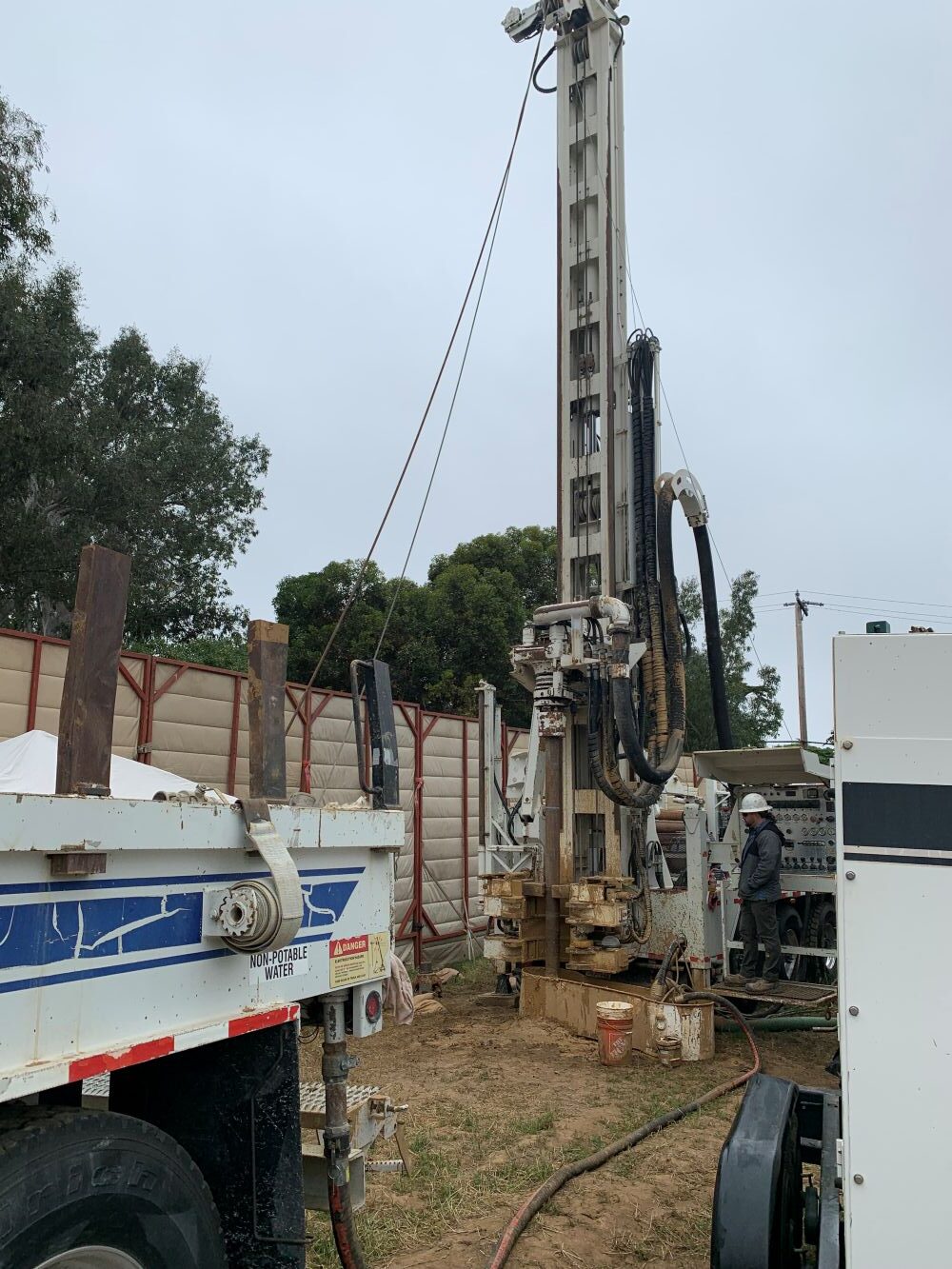
Good Vibrations for Coastal Collaborations
Montecito’s Groundwater Sustainability Agency teams up with beach dwellers for well water monitoring.
Collaborative, data focused work is at the center of the Montecito Groundwater Sustainability Agency’s (Montecito GSA) activities and their Groundwater Sustainability Plan. Public or private wells that provide direct access to the groundwater supply can be used to collect needed data. In addition to public wells owned by Montecito Water District, more than 50 private wells now participate in monitoring programs related to conditions such as seawater intrusion, groundwater quality, groundwater levels, and metered extractions.
More typical around the State are groundwater basins with a relatively small number of high-producing wells that supply groundwater for uses such as municipal and / or agriculture. Montecito is unique in that there are several hundred relatively low producing wells, public and private, that access a geologically intricate Basin to provide water for individual and group uses in a relatively small geographic area. Current and continued private involvement are key to establishing and maintaining truly representative monitoring networks with relevant data.
Using new or existing wells saves the expense of constructing and maintaining a dedicated monitoring well. Avoiding costs for constituents is a priority for Montecito GSA which is funded through a property tax assessment based on the size of any parcel overlying the Basin ($120 per acre). Significant grants helped fund many initial projects, such as the installation of a monitoring well on Montecito Sanitary District’s coastal property. While government funding seems to have dried up for the moment, critical data gaps still exist and there is more work to be done.
To this end, Montecito GSA recently adopted Resolution 21 which could support new private well construction in the coastal zone. To receive Montecito GSA’s backing, the well would need to meet certain criteria, be in an area where data gaps exist, and guarantee permanent monitoring access. The resolution serves to further Montecito GSA’s effective management of the Basin and fiscally responsible implementation of the Groundwater Sustainability Plan. Well permitting authority resides with the County with input from the Coastal Commission and conversations with these entities are ongoing.
What makes a well suitable for a monitoring program? Considerations include location, depth, and construction methods. Interested property owners with existing or prospective wells, particularly in the coastal zone, are encouraged to contact Montecito GSA to discuss possible participation.
Well Registry & Background:
Montecito GSA is the local Groundwater Sustainability Agency, established in 2018 to ensure a reliable and sustainable groundwater supply for the community through effective basin management pursuant to State law: the Sustainable Groundwater Management Act (SGMA). Recognizing the importance of groundwater throughout California, the SGMA legislation provided an opportunity for organized local management of more than 125 geologically defined groundwater basins Statewide that were categorized as medium or high priority. As was the case for Montecito, GSAs formed successfully for the majority of Basins and satisfied the State requirement with a sufficiently documented Groundwater Sustainability Plan (Plan). However, a handful of Basins are now under State management because their Plans were deemed incomplete.
“The foundation for Montecito GSA’s Plan is a collaborative, knowledge-based process informed by the best available data, science and information,” said General Manager Nick Turner. “The Plan is specific to the conditions, risks, geology and users of this Basin, and the end goal is long-term sustainable use of the groundwater basin for the benefit of all stakeholders. The more private participation we have, the better equipped we are to ensure success.”
In addition to detailing the Montecito Groundwater Basin’s characteristics, the Plan establishes criteria to be measured and identifies specific results that might indicate risk for “undesirable results.” This SGMA lingo refers to the six most notorious threats to groundwater, the most relevant locally being possibilities for seawater intrusion, degradation of water quality, and chronic lowering of groundwater levels. The goal is to have ongoing, accurate, and timely data collection, and modeling, to regularly validate the Basin’s health.
Effective monitoring and analysis mapped out in the Plan aims to reveal potential indicators well ahead of any problems developing so that action could be taken if needed. So far, all available data shows the Basin to be in good health, and free from undesirable results. The only actions deemed necessary at this time revolve around filling data gaps to ensure this picture is, and remains, accurate.
Sustainability is a long-term project: the State requires annual reports and comprehensive Plan updates every 5 years, all of which will incorporate accumulated data and refined analysis. Montecito GSA is now working diligently to complete assigned projects, which include grant-funded enhancements to stream flow monitoring and the Well Registry. Registry is required for all wells overlying the Basin, and is essential for filling data gaps and ensuring that well owners receive ongoing communications as needed. So, if you’re a well owner with that form sitting in your inbox, here’s a ping to turn it in! For assistance with registration forms or more information on participating in well monitoring programs, don’t hesitate to call 805.324.4207.
As seen in Montecito Journal
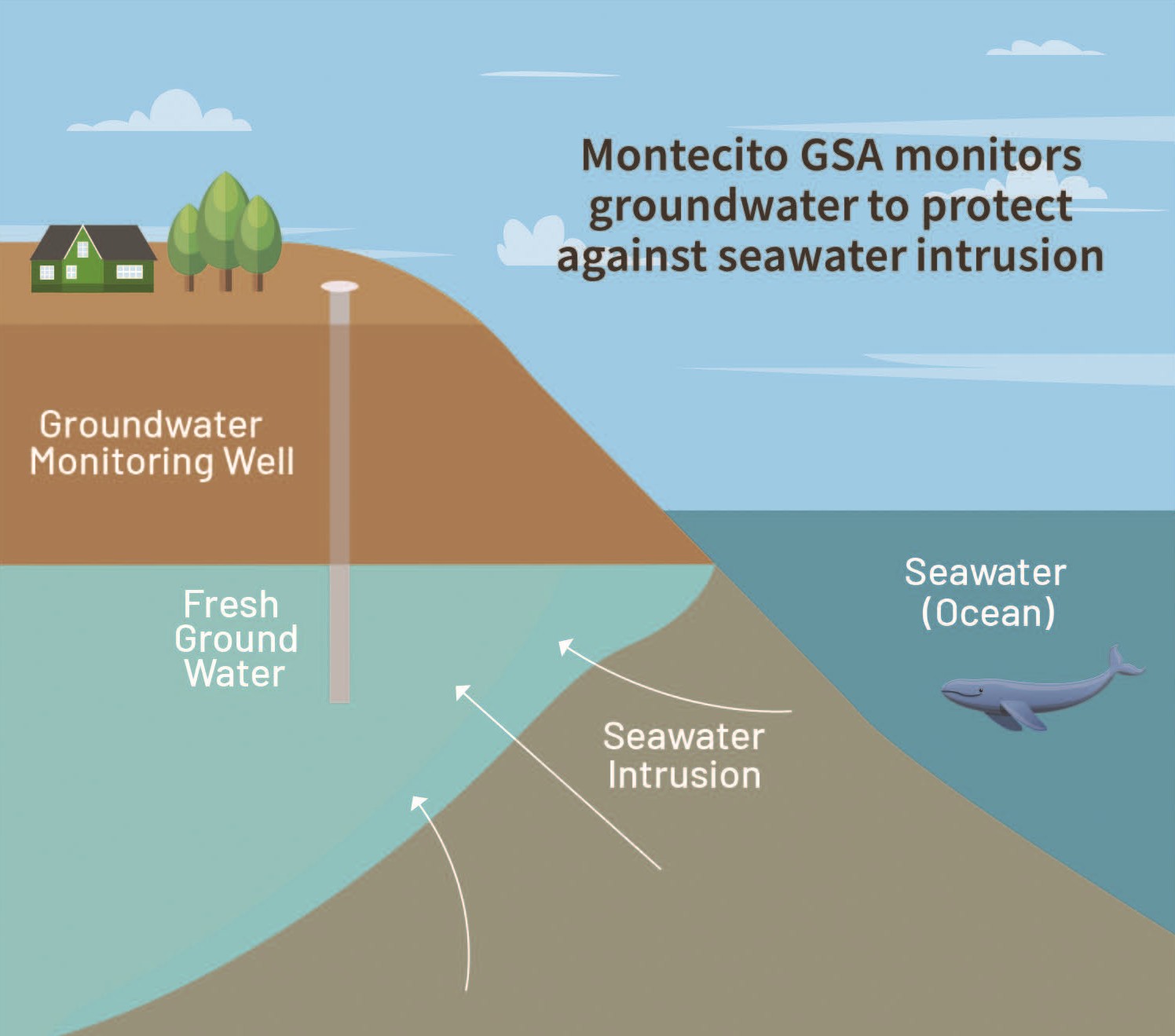
Requests for collaboration mailed to properties in the coastal zone include diagrams (as shown above) illustrating how seawater intrusion is possible. Owners with existing wells that are not currently participating in a monitoring program, and those interested in drilling new wells, are encouraged to contact Montecito GSA for more information.